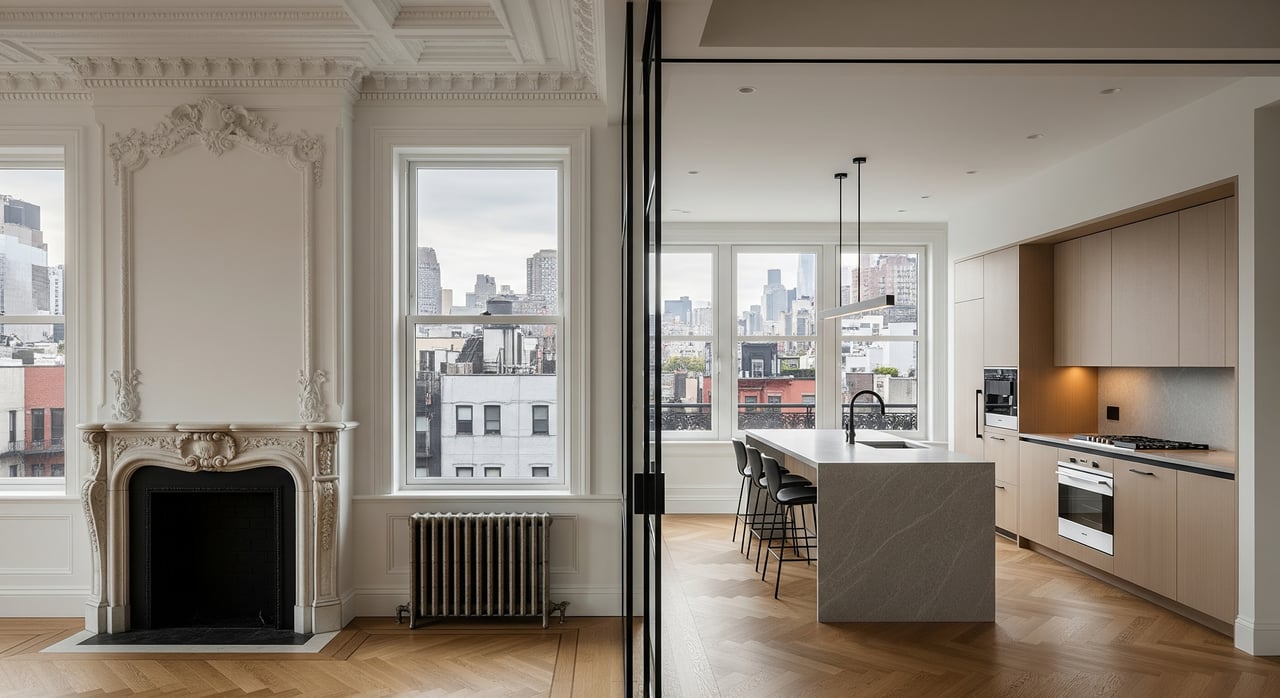
Is your ideal Chelsea home a sunlit pre‑war with crown moldings or a sleek new condo with a skyline roof deck? It can feel like two different lifestyles. You want the right fit, not regrets. In this guide, you’ll learn the real tradeoffs between pre‑war and new development in Chelsea, how ownership type affects your financing and flexibility, and what to check before you bid. Let’s dive in.
Pre‑war homes: charm and scale
Pre‑war buildings in Chelsea include brownstones, walk‑ups, and classic elevator co‑ops. You often see tall ceilings, plaster details, hardwood floors, and defined rooms. Many buyers love the sense of history and the solid, quiet feel.
Layouts lean traditional. Expect separate kitchens, formal dining rooms, and smaller baths unless a prior owner renovated. Light varies by line and floor; corner and top‑floor units can be bright, while lower floors may be cozier.
What you’ll like:
- Character that feels timeless.
- Gracious proportions, especially ceiling height.
- Quieter interiors and a sense of privacy.
Tradeoffs to plan for:
- Fewer open kitchens and fewer en‑suite baths.
- Potential upgrades to plumbing, electrical, or windows over time.
- Limited amenities in many buildings.
New development: convenience and amenities
In West Chelsea and near the High Line and Hudson Yards, new condos emphasize light and flow. Think open kitchens, floor‑to‑ceiling windows, in‑unit washer/dryers, and central HVAC. Many buildings add full‑service staff and lifestyle amenities.
Most new floor plans maximize usable space and storage. You’ll often find en‑suite bedrooms, integrated appliances, and options for private terraces or balconies.
What you’ll like:
- Turnkey condition with modern systems.
- Amenities like doorman, gym, roof deck, and package rooms.
- Flexible layouts that fit today’s living and entertaining.
Tradeoffs to consider:
- Glassy interiors can feel less “warm” to some.
- Higher common charges tied to amenities and staffing.
- Premium pricing for newness and convenience.
Ownership and financing: co‑op vs condo
Your ownership type shapes the whole experience. In Chelsea, many pre‑war buildings are co‑ops. Most new developments are condos.
Co‑ops (common in older pre‑war stock):
- You buy shares in a corporation and receive a proprietary lease.
- Boards can require detailed financials, strong liquidity, and an interview.
- Down payments are often higher, and sublet rules can be strict.
- Closing costs can be lower than condos because of how taxes and fees are structured.
Condos (typical for new development):
- You own the unit and a share of the common elements.
- Board approval tends to be more straightforward.
- Financing options are broader with typical down payments in the 10–20 percent range.
- Closing costs are higher due to items like mortgage recording tax and title insurance.
If you need flexibility for renting in the future, or if lower down payment options matter, condos often fit better. If you value community norms and potentially lower closing costs, a co‑op can work well if you meet the building’s financial standards.
Costs and taxes: what to expect
Monthly carrying costs vary. Many pre‑war buildings without big amenity packages can have lower monthly fees, but they may face special assessments for capital projects like roof or façade work. Newer buildings often have higher common charges that cover staffing and amenities, but short‑term capital risk is lower because systems are newer.
Property taxes depend on ownership form and assessed value. Condo owners pay taxes directly. In co‑ops, taxes are part of maintenance. New developments may have specific incentives or abatements attached to certain units, but these vary and change over time. Always review the building’s financials and confirm details with your attorney and CPA.
Closing costs differ too. Co‑ops generally have fewer line items. Condos include title insurance, recording fees, and mortgage recording tax. Ask your lender and attorney to prepare an apples‑to‑apples estimate early.
Systems and maintenance: risk vs readiness
Pre‑war buildings can have older electrical, plumbing, and heating systems. Many have steam heat and window or through‑wall AC unless upgraded. Renovations by prior owners can improve things, but quality varies, so inspections matter.
New development gives you modern systems and better energy performance on average. Still, newer buildings are not risk free. Pay attention to construction quality, punch‑list items, and warranty coverage. Sponsor track record and reserve funding matter.
Key checkpoints for pre‑war units:
- Electrical capacity, plumbing age, window condition, and roof status.
- Boiler and elevator maintenance history.
- Any evidence of water intrusion or past leaks.
Key checkpoints for new development:
- Offering plan details and warranty terms.
- Certificate of occupancy and permit closeouts.
- Amenity cost allocations and reserve contributions.
Amenities and lifestyle: High Line to Hudson River
Chelsea’s lifestyle is a major draw. Proximity to the High Line, Hudson River Park, Chelsea Market, and the Gallery District adds daily convenience. Transit access to the A/C/E, F/M, and L lines helps you move around the city easily.
Pre‑war buildings may offer fewer on‑site amenities, but you gain neighborhood character and street‑level charm. New development brings the building experience to you with doorman, fitness spaces, resident lounges, and rooftops with views. If you work from home or host often, amenities can amplify your daily life.
If outdoor space is high on your list, new condos more often have balconies or terraces. Older buildings may offer shared roofs or gardens in select cases.
Resale and value: what holds up
Resale strength in Chelsea follows fundamentals: location, layout, light, outdoor space, and building reputation. Age alone does not decide value.
Pre‑war units with quality renovations and strong architectural details tend to maintain buyer appeal. New development with functional layouts, private outdoor space, and full‑service staffing can command premiums, especially for buyers who want turnkey living.
Luxury new construction can be more sensitive to broader market swings. Well‑run co‑ops can trade more steadily but may be less liquid due to board approvals and stricter policies. Your time horizon, tolerance for carrying costs, and need for flexibility should guide your choice.
Decision framework: match home to priorities
Use this quick filter to clarify your path:
Choose pre‑war if you:
- Prize character, high ceilings, and classic details.
- Are comfortable with potential upgrades over time.
- Prefer quiet, defined rooms and a sense of history.
Choose new development if you:
- Want turnkey condition with modern systems and central air.
- Value amenities, service, and flexible ownership rules.
- Prefer open layouts, en‑suite baths, and in‑unit laundry.
Balance with finances:
- Need broader financing options or lower down payment potential? Consider condos.
- Prefer potentially lower closing costs and do not need sublet flexibility? Consider co‑ops.
Chelsea buyer checklist: verify before you bid
For pre‑war purchases:
- Hire a licensed inspector with experience in older NYC buildings.
- Review board minutes, recent assessments, reserve levels, and capital plans.
- Confirm permits for past in‑unit renovations and check for open violations.
- Ask for boiler, façade, roof, and elevator maintenance records.
- Consider lead paint or asbestos testing where relevant.
For new development purchases:
- Read the offering plan and confirm warranty and punch‑list policies.
- Verify certificate of occupancy, DOB closeouts, and any open violations.
- Ask about sponsor control, percent sold, and reserve funding.
- Review amenity maintenance agreements and any interim assessments.
For financing and closing:
- Confirm building lending guidelines and whether FHA/VA is permitted, if needed.
- Obtain the most recent audited financials and budget.
- Model mortgage recording tax, title insurance, transfer taxes, and move‑in fees.
- Ask about any pending litigation.
Questions to ask management or the seller:
- What is the reserve balance and history of assessments?
- What capital projects were completed and what is planned?
- What are the sublet, pet, and short‑term rental policies?
- What is the building’s turnover rate and typical days on market?
Smart next steps
- Define non‑negotiables: budget, ownership type, must‑have features.
- Compare a short list of pre‑war and new development options side by side.
- Begin document review early to avoid surprises, especially for co‑ops.
- For new construction, confirm delivery timeline, warranty coverage, and fee projections.
When you are ready, partner with a local team that understands both pre‑war nuance and new‑development detail. The right advisor will help you spot red flags, negotiate smartly, and position you for a smooth close.
Ready to explore Chelsea with a clear plan? Request a Private Consultation with McKenzie Ryan for curated listings, due‑diligence support, and a strategy tailored to your goals.
FAQs
What is the main difference between pre‑war and new development in Chelsea?
- Pre‑war emphasizes classic details and defined rooms, while new development focuses on open layouts, modern systems, and amenity‑rich living.
How do co‑ops and condos affect financing in Chelsea?
- Co‑ops often require higher down payments and detailed board review; condos usually allow broader loan options and lower down payment minimums but have higher closing costs.
Are monthly costs lower in pre‑war buildings than new condos?
- Not always. Pre‑war fees can be lower if amenities are minimal, but special assessments can arise. New condos often have higher common charges tied to services and amenities.
What should I inspect in a pre‑war Chelsea apartment?
- Focus on electrical capacity, plumbing age, windows, roof, boiler and elevator history, and any signs of water intrusion or unpermitted work.
What should I review before buying in a new Chelsea development?
- Read the offering plan, confirm warranty terms, verify certificate of occupancy and permit closeouts, check reserves, and understand how amenity costs are allocated.
Which holds resale value better in Chelsea: pre‑war or new development?
- It depends on fundamentals like location, layout, light, outdoor space, and building reputation. Both can perform well when those boxes are checked.